Nadia Ariefdien
Loading 01%
|
3 min read
The Brief
Step-by-Step is a community-driven running club built around a simple but powerful idea: progress happens gradually through pace, rhythm, and consistency. It's not about being the fastest. It's about showing up, moving forward, and growing alongside other people who are doing the same.
The brief was to create a visual identity that captured that spirit. Something bold enough to stand out, human enough to feel welcoming, and flexible enough to work across everything from merchandise to digital touchpoints.
Finding the Concept
Before I touched a single tool, I spent time sitting with the name. Step-by-Step. It's literal and metaphorical at the same time. It speaks to running, yes, but also to patience, process, and building something one piece at a time.
That dual meaning became the anchor for everything.
The central question I kept coming back to was: how do you make progress visible? How do you design something that doesn't just represent a running club, but actually embodies the feeling of moving forward, steadily, together?
The answer came in the form of a pixel.
The Logo: A Runner Built from Steps
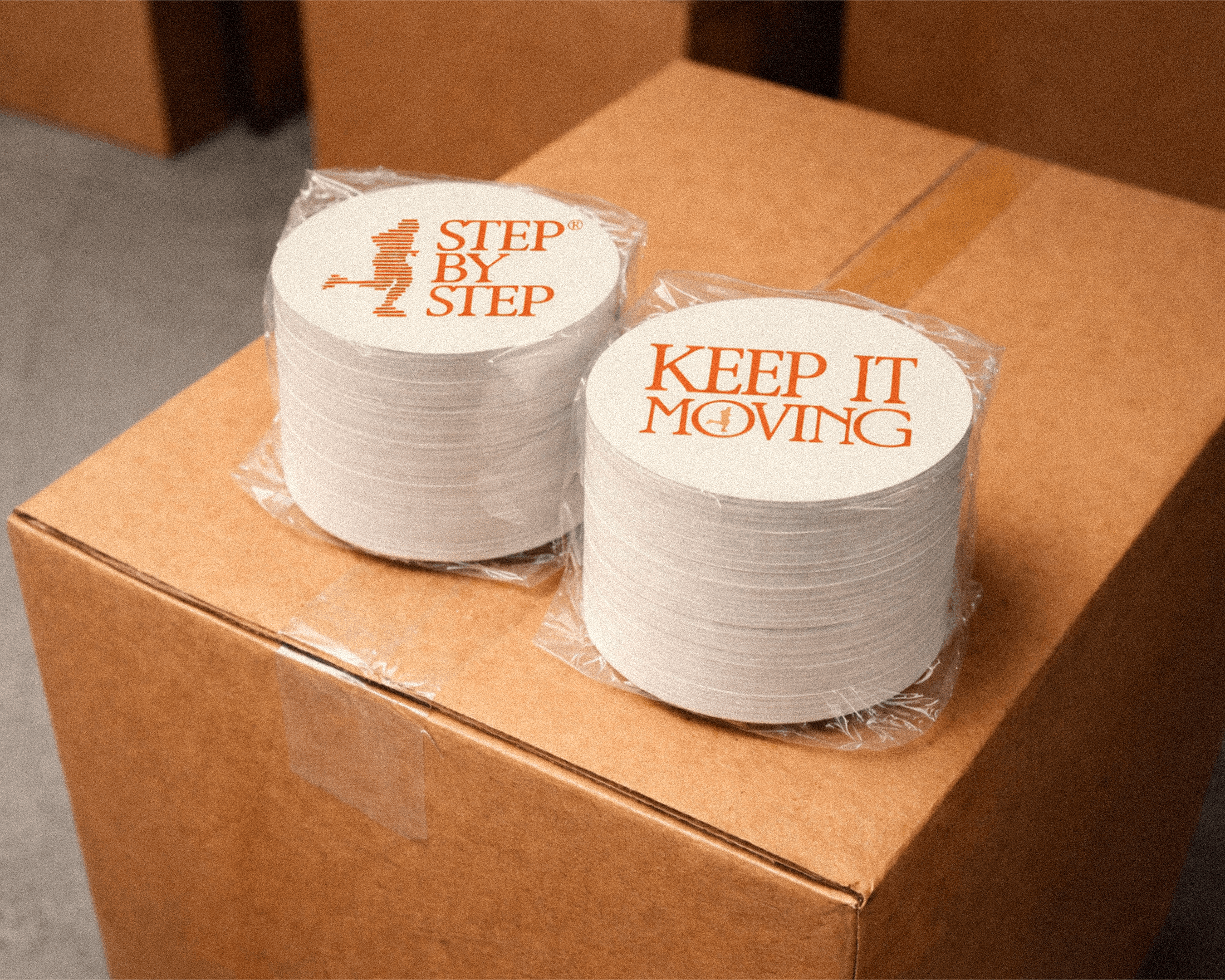
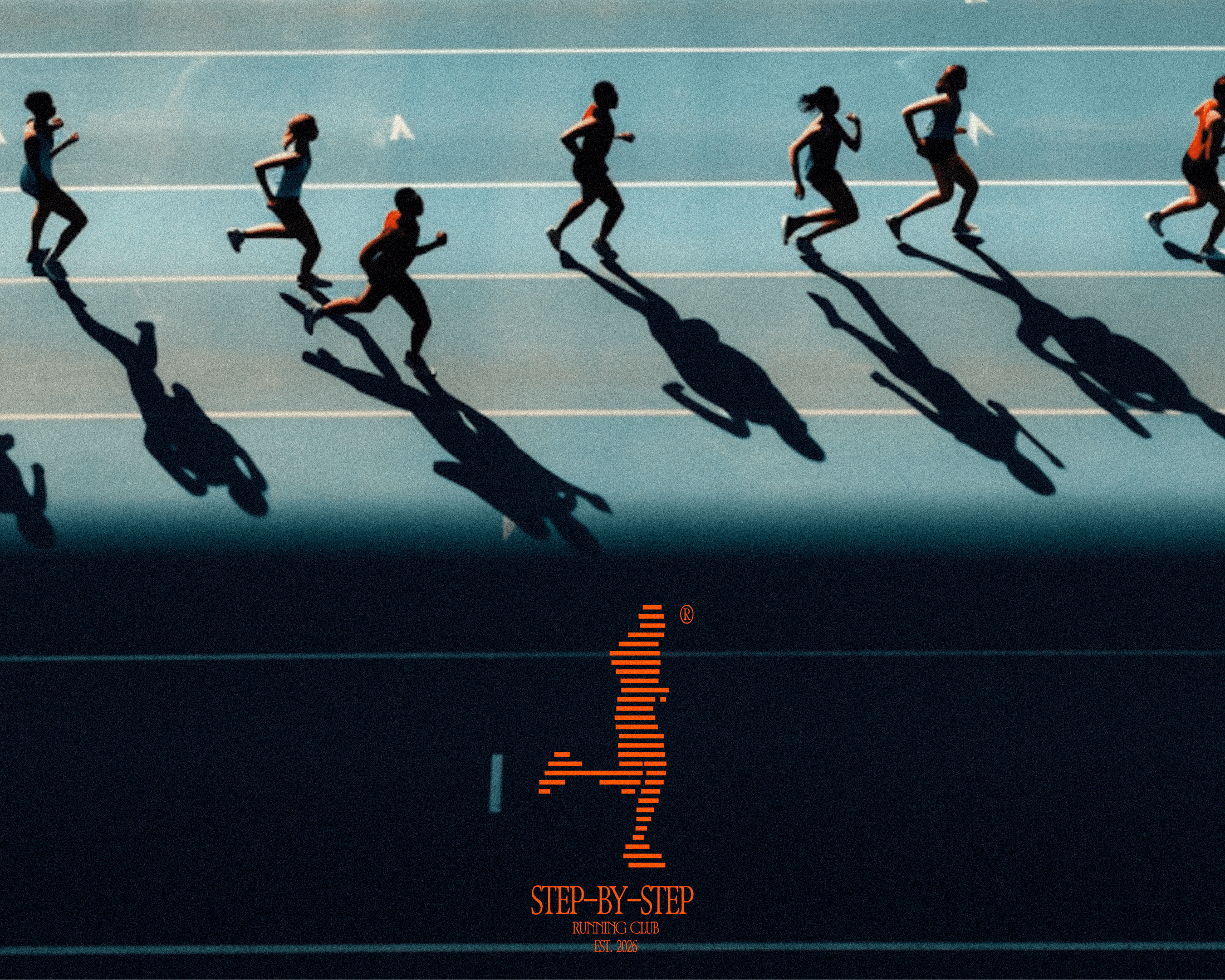
The logo is a pixelated running figure, but not in the way you might expect. Instead of a standard pixel grid, I constructed the figure using rectangular block-like shapes that deliberately resemble steps. Each block is a building block. Each shape is a stride.
It's a small detail that rewards a second look. Once you see it, you can't unsee it. The logo isn't just showing a runner, it's showing how progress works.
The simplified, blocky style also gave the mark instant versatility. It reads clearly at any size, works across light and dark backgrounds, and holds its own whether it's on a t-shirt, a phone screen, a sticker, or a race bib.
Bringing it to Life: The Animation
Once the static logo was locked in, it became obvious it needed to move.
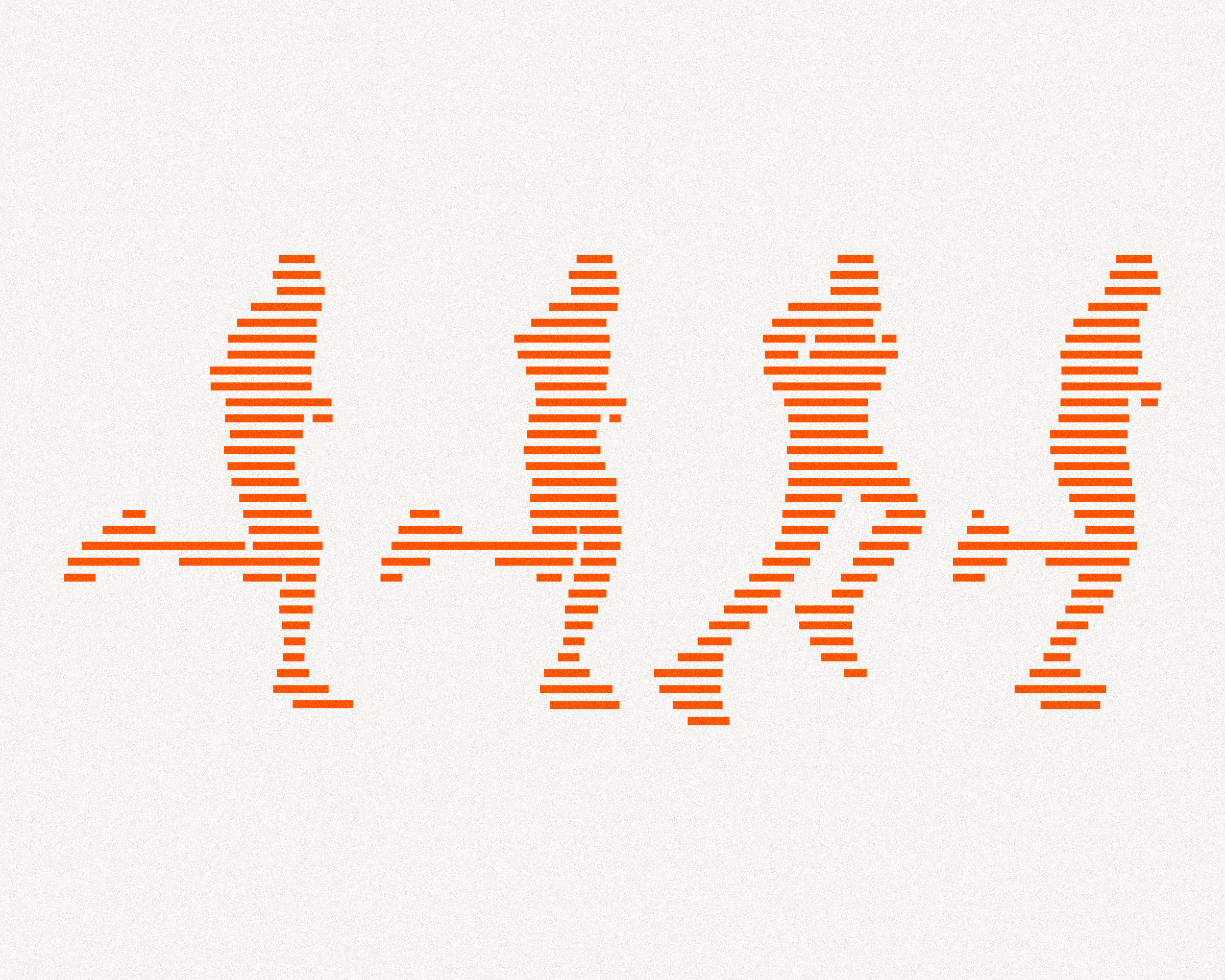
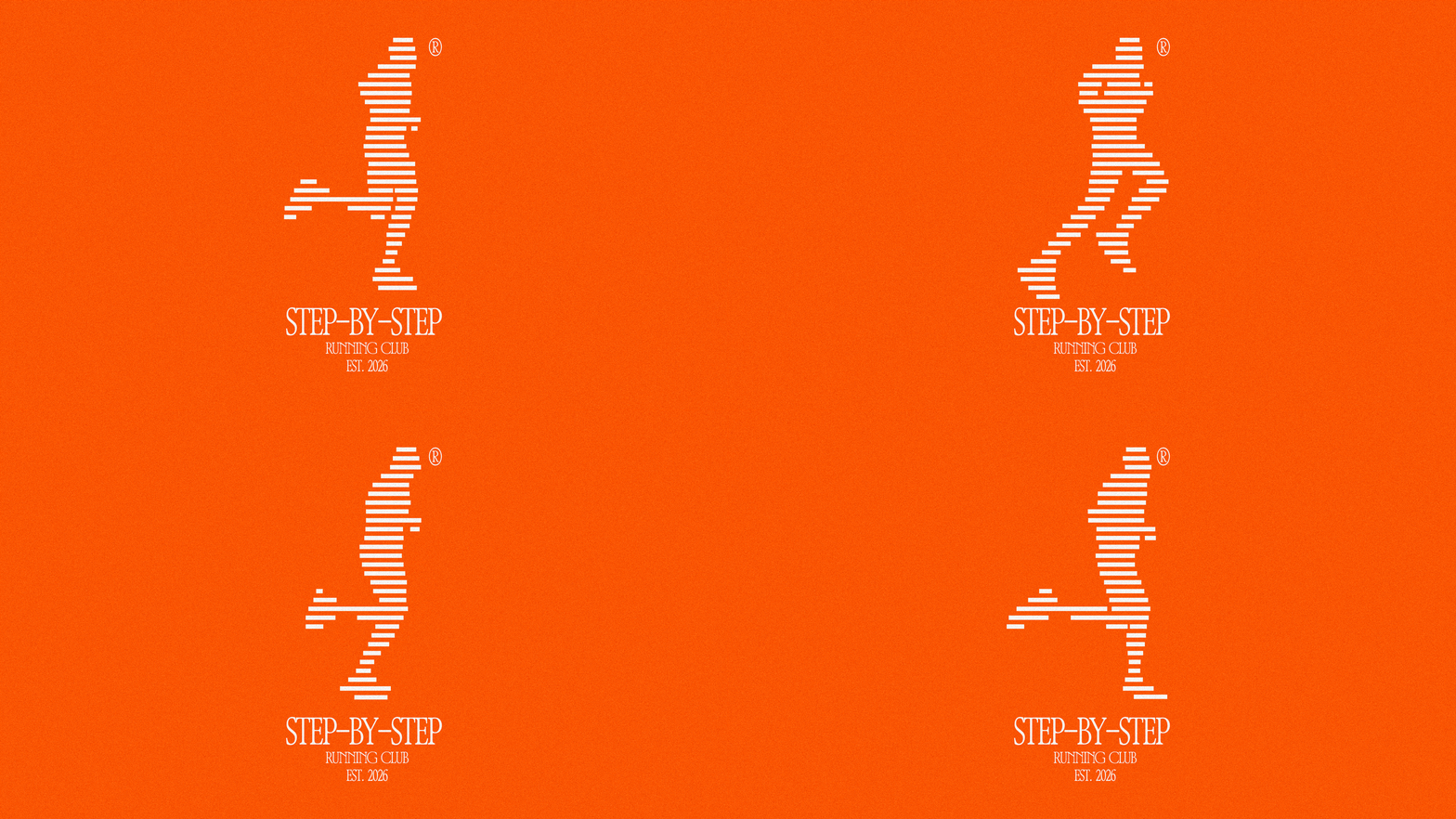
I turned the pixelated runner into an animation by adjusting the width of each rectangular block to reflect the runner's form across different positions in their stride. Frame by frame, the figure runs. Not smoothly or perfectly, but rhythmically. Almost like a retro video game character brought to life.
The staggered, imperfect movement of the pixel animation mirrors the imperfection of the running journey itself. You don't glide through progress. You work through it, one frame at a time.
Color: Bold, Warm, & Full of Energy
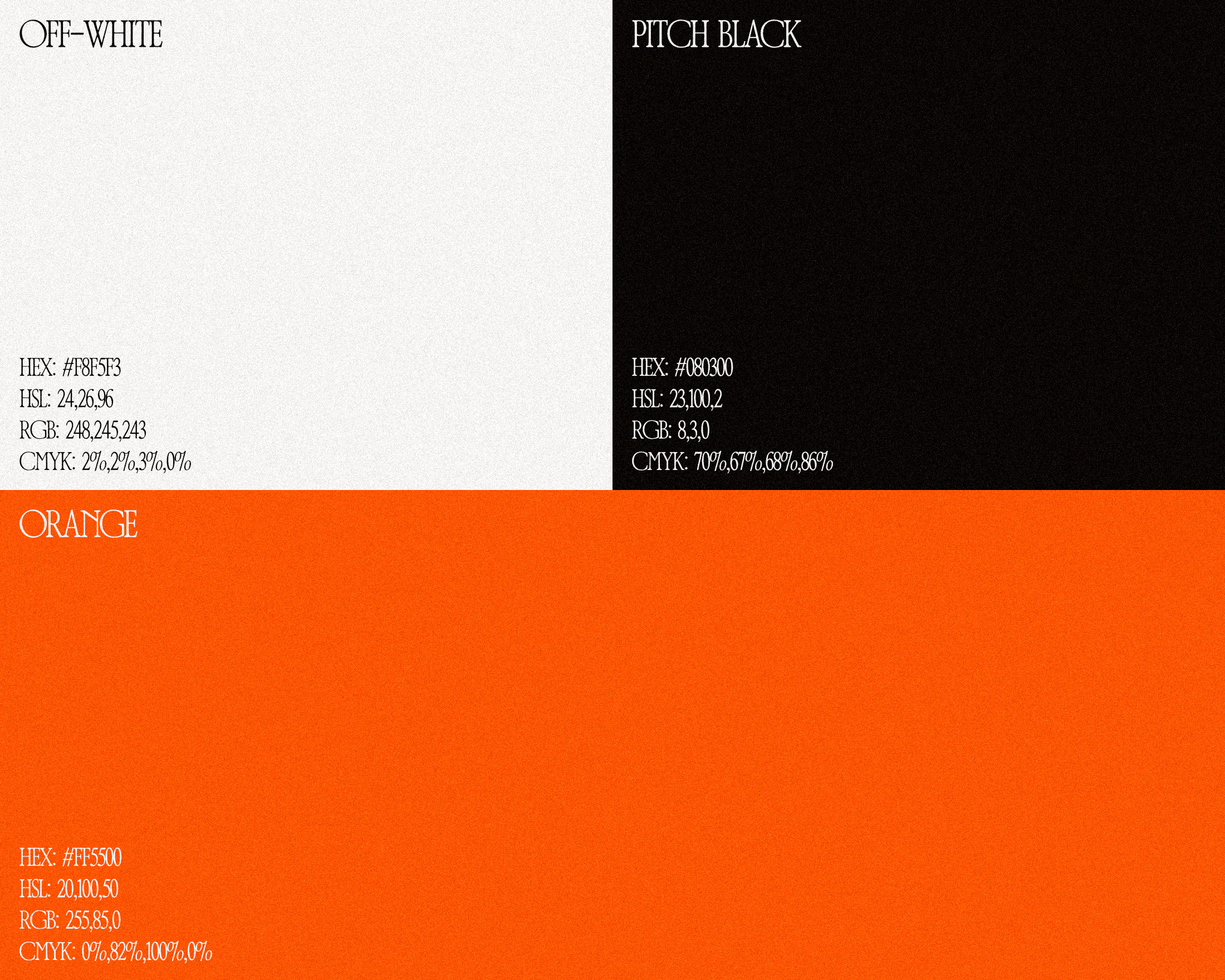
The color palette is built around three core colors: a soft cream off-white, a warm off-black, and a bold, bright orange.
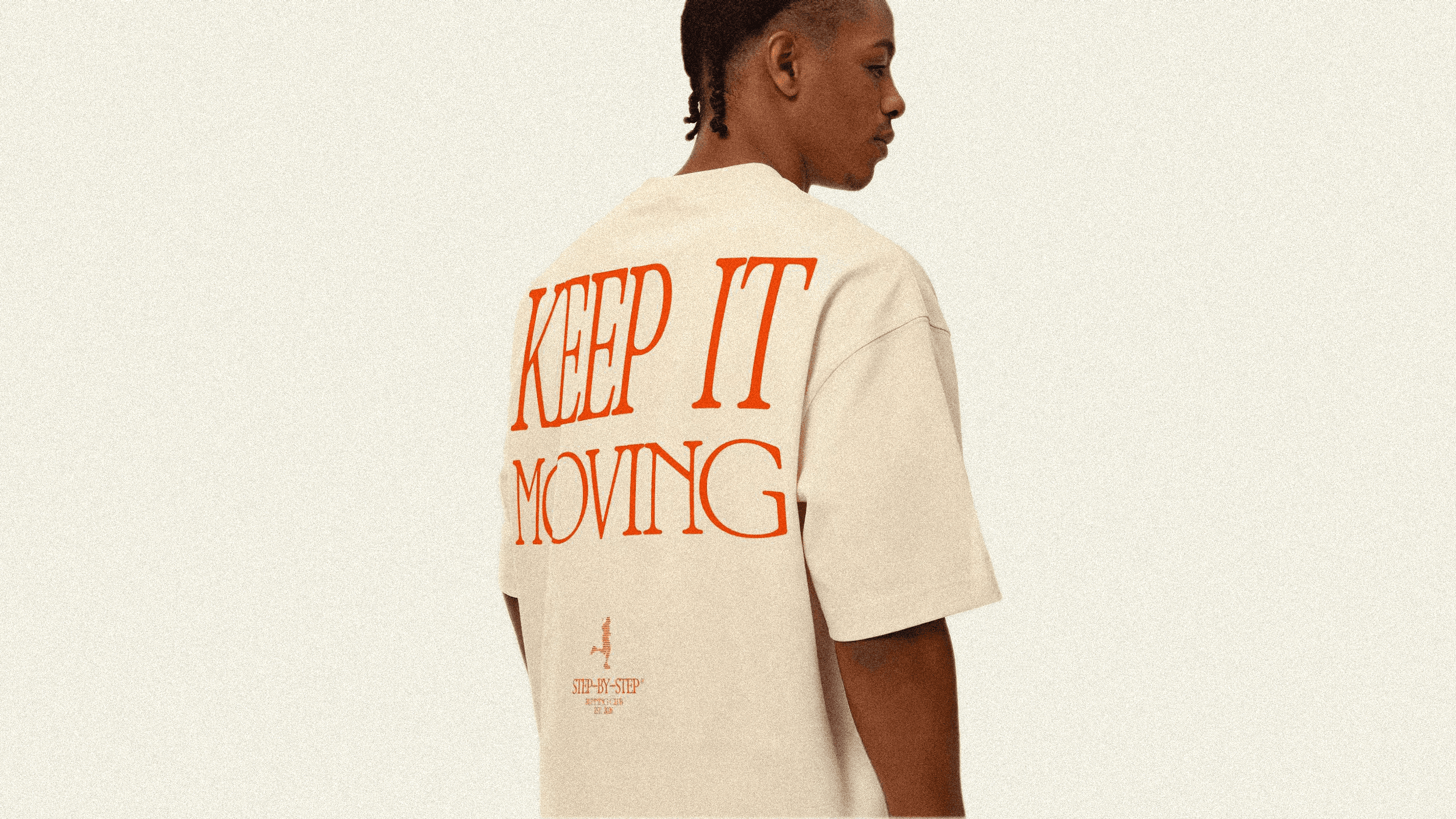
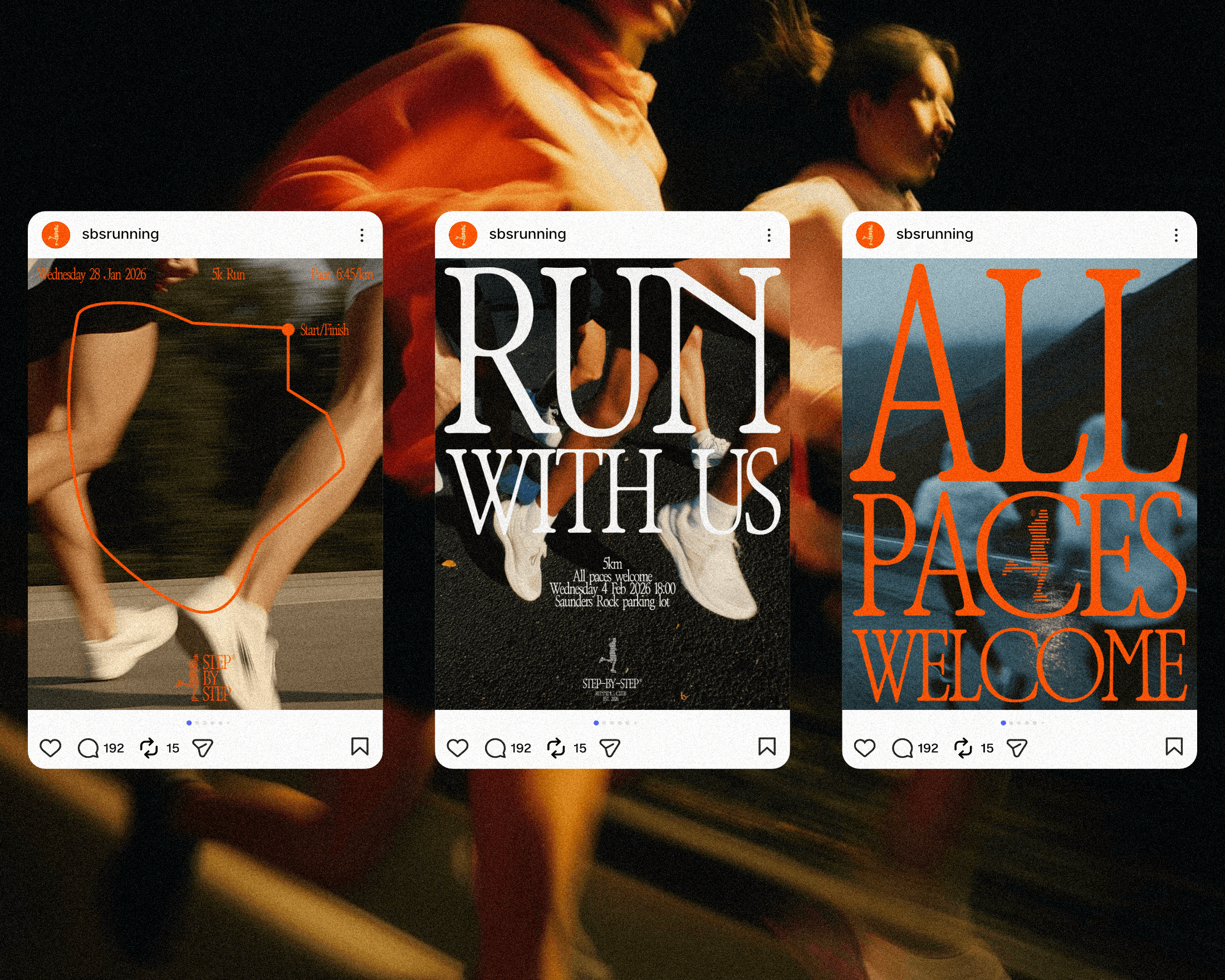
The orange does the heavy lifting. It's active, energetic, and alive – the kind of color that pulls your eye across a page. It also fits the retro aesthetic naturally, nodding to the era of bold athletic branding before everything became minimal and muted.
The cream and off-black keep things grounded. Together, the three colors strike a balance between energy and warmth – approachable but confident and vibrant but not aggressive.
Typography & Texture: Leaning into the Retro Aesthetic
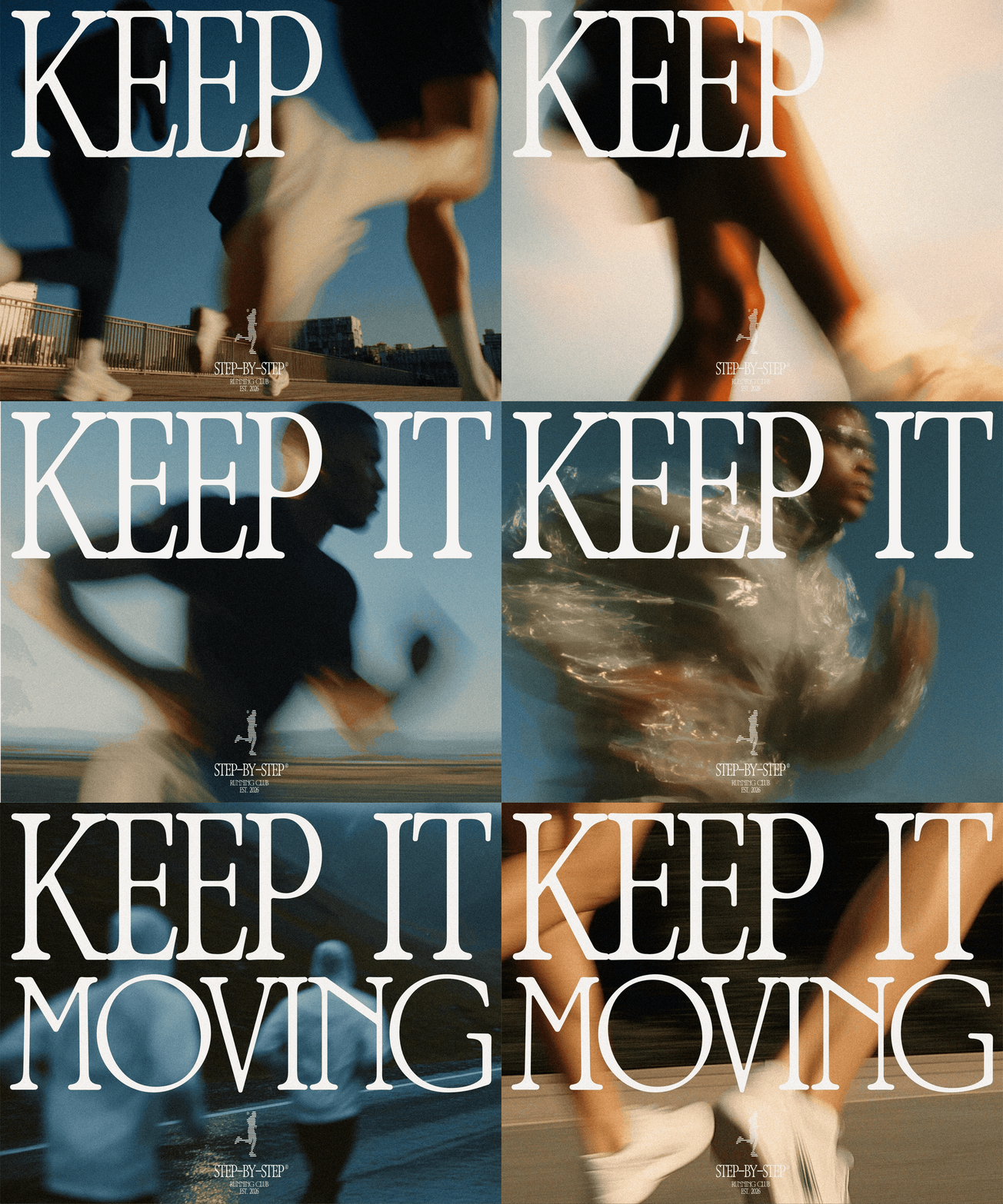
The core typeface for this identity is Instrument Serif – a retro-inspired serif with just enough character to feel distinctive without being loud. It anchors the identity in a different era, one that feels more analogue, more physical, and more present.
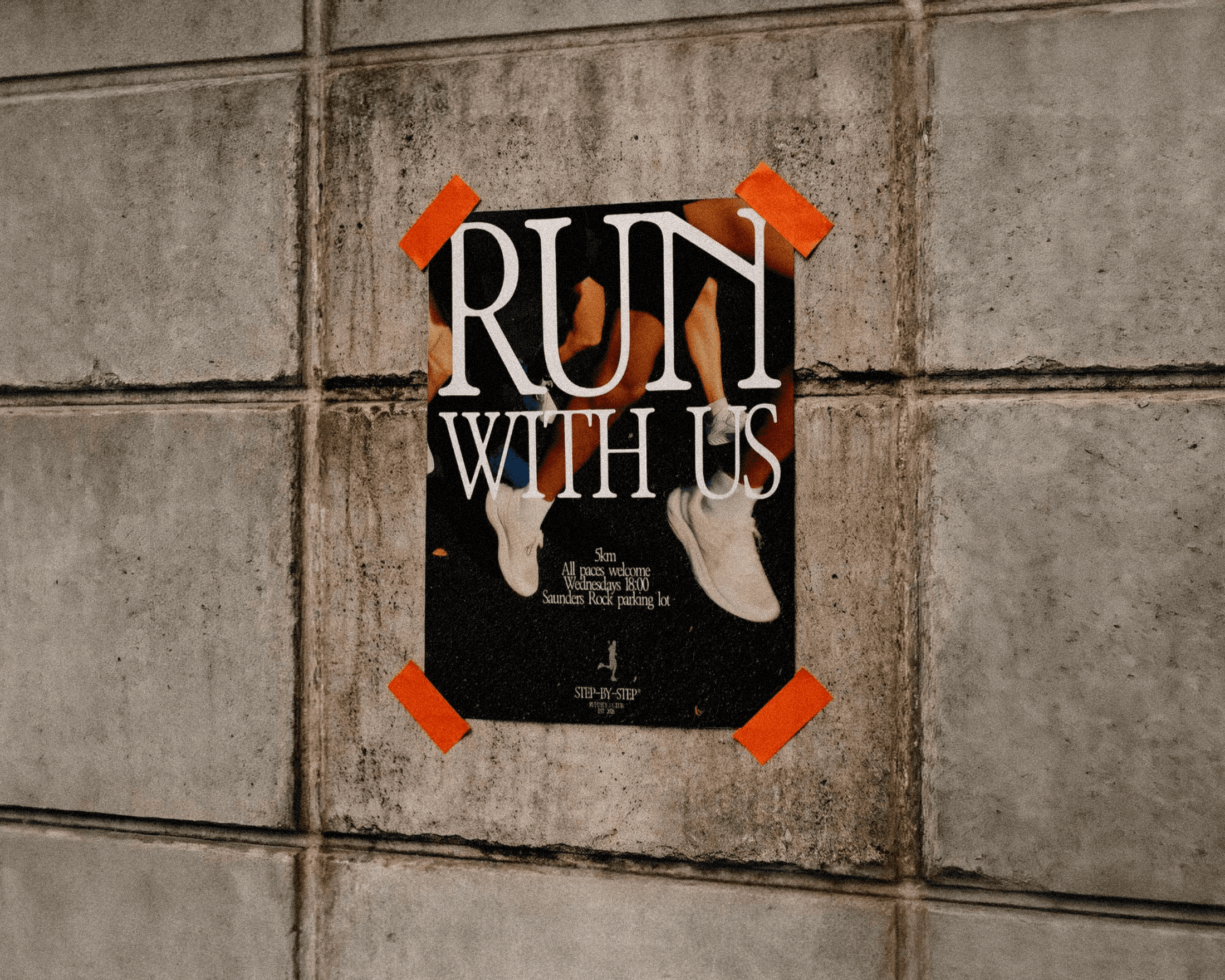
Paired with grainy, textured photography throughout, the overall aesthetic pulls from a very specific moment in time: the 90s athlete. Before everything was digital. Before community meant followers. When people gathered in person, trained in groups, and measured progress with their bodies rather than their metrics.
There's something intentional about that reference for a brand like Step-by-Step. A running club is, at its core, a deeply human, deeply social thing. The retro aesthetic reinforces that — it says: this is about people, not platforms.
How it All Came Together
What I love most about this project is how cohesive the concept feels across every layer. The logo is built from steps. The animation shows the act of running. The color communicates energy. The typeface and texture root everything in community and human connection.
Nothing is decorative for the sake of it. Every decision traces back to the same idea: progress happens one step at a time, and it's better when you're not doing it alone.
That's the story Step-by-Step tells – and it was my job to make sure the visuals told it just as clearly as the words do.
Final Thoughts
Branding projects like this one are a reminder of why concept-led design matters. When the idea is strong, everything else follows. You're not making arbitrary choices – you're solving a visual puzzle where every piece has a reason to exist.
Step-by-Step is a brand built for people who believe in the process. I hope the identity reflects that.
Bold enough to be noticed. Human enough to be felt.